Veermyk Sluice
Hans Brinker, or The Silver SkatesVeermyk Sluice belongs to a landscape in which water control is essential to safety and daily life. The sluice gates help manage the meeting of the IJ and Haarlemmermeer, where the river is described as five feet higher than the surrounding land. Their position makes the surrounding dikes and gates more than background scenery: they are barriers against water that could otherwise flood the low country.
Setting and Hydraulic Purpose
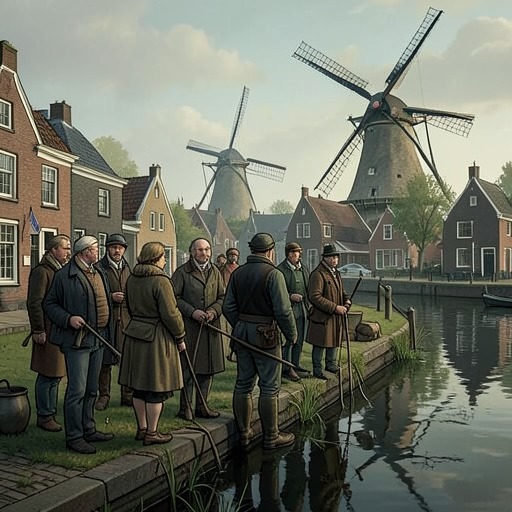
At Halfweg, Lambert explains that the meeting of the IJ and Haarlemmermeer makes the area difficult to manage. The difference in water level, he says, requires strong dikes and sluice gates. He presents the arrangements as unusually impressive and tells the group they will walk over them to see how they work. The sluice is thus introduced not as an isolated structure but as part of a coordinated system for controlling water at a vulnerable junction.
The surrounding water also serves purposes beyond drainage and protection. Lambert says that the lake’s spring water is reputed to have exceptional bleaching powers and is used by the large Haarlem bleaching works. He adds a more personal detail: he has often caught very large eels there, which he says can nearly wrench a person’s arm from its socket. His account moves between engineering, industry, and recreation, showing how the same managed waters enter several kinds of everyday experience.
Dikes, Canals, and Movement
The sluice forms part of a wider infrastructure that also organizes travel. On the boys’ skating route, a straight canal runs between long rows of bare willow trees, while a carriage road crosses the top of a great dike built to contain Haarlem Lake. Skaters, iceboats, push-chairs, and small sleds share the frozen canal. The scene makes clear that Dutch waterways and embankments are used not only to restrain water but also to shape routes across the country.
Windmills provide another part of this larger water-management network. Across Holland, their principal work is pumping water from lowlands into canals and helping guard against inland floods. The sluice gates, dikes, canals, and pumps therefore answer related needs: moving water where it is wanted, holding it back where it threatens, and keeping land and routes usable. The narrative’s view of the sluice gains meaning from this dependence on connected structures and continuing maintenance.
Raff Brinker’s Accident
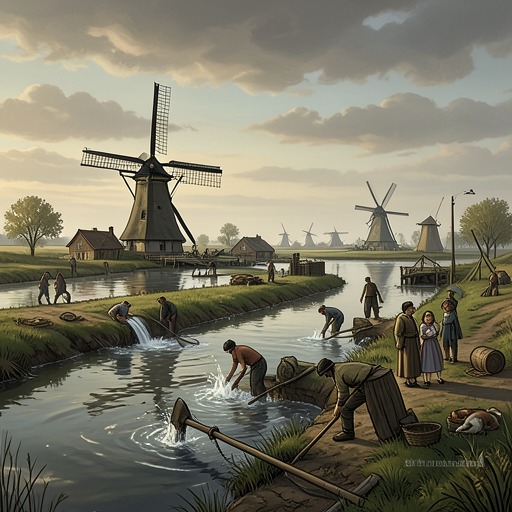
Veermyk Sluice is linked to the Brinker family’s history through Raff Brinker’s work on the dikes. During a threatened inundation, in a terrible storm of darkness and sleet, he was among the men laboring at a weak spot near the sluice. He fell from the scaffolding and was left insensible. From that hour he never worked again; although he survived, his mind and memory were gone.
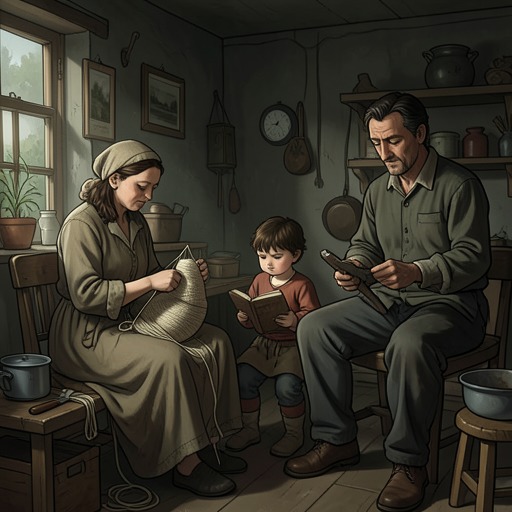
The accident marks a stark contrast between the collective labor that protects the country and the danger borne by the workers who perform it. For Gretel, Raff is remembered only as the silent man whose eyes followed her vacantly. Hans, who was older before the accident, still recalls a cheerful father who carried him on his shoulders and sang. The sluice is therefore attached not only to the practical business of flood control but also to the loss that divides the children’s memories of their father.
Narrative Significance
The place concentrates the book’s two scales of water-related danger. At the regional scale, dikes and sluices defend inhabited land against flooding; at the human scale, the work of maintaining those defenses exposes laborers to immediate risk. Raff’s fall near Veermyk Sluice turns this infrastructure into a decisive point in family history, linking the public struggle to manage water with a private, lasting change in the Brinker household.